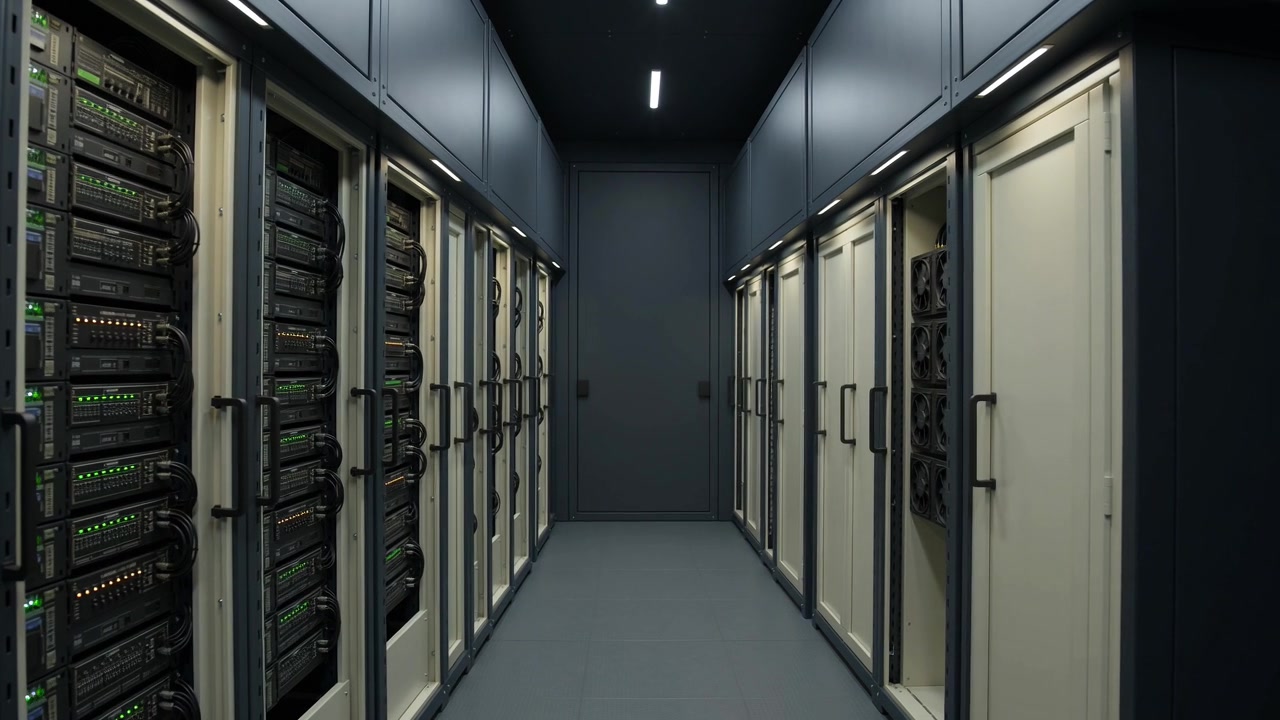
Built for Real-World Edge Infrastructure
Tech Operations helps organizations move from fragmented server rooms to reliable micro datacenter environments
that are practical, secure, and maintainable over time. We focus on right-sized infrastructure: the minimum footprint
that still provides enterprise-grade continuity, observability, and growth headroom. Our projects are designed for
distributed operations, regulated processes, and teams that need both performance and predictability.
15+
Years in infrastructure operations and deployment governance
End-to-end
Design, procurement, build, commissioning, and lifecycle support
Vendor-neutral
Architecture and component selection driven by outcome, not lock-in
What We Deliver
A micro datacenter is not just a cabinet with devices. It is a complete operational system composed of compute,
storage, network, rack power distribution, cooling strategy, environmental controls, physical security, telemetry,
and continuity procedures. Our realization approach addresses all these dimensions together so that the delivered
environment performs as an integrated whole from day one.
We work with companies that need local processing close to operational workflows, branch-level resilience,
manufacturing adjacency, regional data-control requirements, or deterministic latency. Typical customers include
software-enabled service organizations, mid-market industrial firms, logistics operators, and compliance-sensitive
accounting or finance ecosystems. Each engagement starts with an assessment of business criticality, acceptable
downtime, data retention constraints, security posture, and growth assumptions over a 24- to 36-month horizon.
The result is an implementation blueprint that makes infrastructure understandable to technical and non-technical
stakeholders alike: clear target architecture, risks, implementation sequencing, acceptance criteria,
and measurable service outcomes.
Service Portfolio
1. Infrastructure Design and Sizing
We translate workload and continuity requirements into practical system architecture. Scope includes server sizing,
virtualization strategy, storage profiles, east-west and north-south network policy, resilience tiering,
and phased scale paths. The goal is not over-engineering but fit-for-purpose architecture that can be operated
by your real team under real constraints.
2. Rack, Power, and Cooling Engineering
We define rack layout, cable zoning, dual-feed strategies, UPS autonomy windows, PDU topology,
thermal pathways, and room-level conditioning assumptions. Deliverables include installation-ready diagrams,
bill of materials alignment, and commissioning checkpoints that verify electrical and thermal behavior
under representative load.
3. Deployment and Commissioning
Our teams handle staged delivery, build sequencing, cable discipline, network handoff,
systems baseline hardening, and controlled go-live. Commissioning includes burn-in tests,
failover drills, telemetry validation, and operational handoff documentation so your staff can
run day-two operations confidently.
4. Managed Lifecycle and Change Control
Post-go-live support includes patch windows, firmware governance, incident triage,
spare and warranty tracking, periodic capacity re-baselining, and controlled expansion plans.
We align maintenance with business calendars and compliance reporting cycles to minimize disruption.
Delivery Model
Our delivery model is built around transparency and repeatability. Every project is managed through defined gates:
discovery, architecture freeze, procurement readiness, implementation window, commissioning, and acceptance.
At each gate we produce explicit artifacts so procurement, operations, finance, and security can make decisions on
shared facts instead of assumptions.
- Discovery and Constraints Mapping: identify workloads, current pain points,
business continuity goals, existing facility limitations, and security requirements.
- Target Architecture and Controls: produce technical design package,
risk map, fallback plans, and acceptance tests.
- Execution and Validation: implement with strict change records,
test against predefined success criteria, and capture runbook-quality operations documentation.
- Transition and Optimization: transfer operational ownership,
monitor early-life performance, and optimize where real usage suggests better fit.
This method allows compact teams to operate sophisticated infrastructure without hidden complexity.
It also gives management a clear visibility line from spend to measurable reliability and service quality.
Security, Governance, and Quality Assurance
Micro datacenter projects often fail not because of hardware quality, but because governance is weak.
Tech Operations integrates security and quality controls from the first architecture draft through handover.
We define baseline hardening standards, credential policy boundaries, least-privilege operational access,
backup validation routines, restore testing cadence, and change-approval checkpoints.
For organizations in regulated sectors, we map operational controls to audit requirements and create
evidence-friendly documentation packages: installation evidence, acceptance test records, versions,
and maintenance logs. This reduces effort in later compliance reviews and avoids the common problem
of reconstructing technical history after the fact.
Operational Quality Baselines
- Structured commissioning checklist with pass/fail criteria
- Power-path and thermal behavior validation under load
- Service restart, failover, and rollback rehearsal
- Evidence package for governance and internal audit
Security and Continuity Principles
- Least-privilege operations and controlled admin paths
- Patch and firmware maintenance governance
- Backup integrity checks with periodic restore tests
- Incident playbooks and escalation runbooks
Representative Implementation Scenarios
Distributed Professional Services Network:
migration from mixed office server closets to standardized micro datacenter pods across locations,
with unified telemetry, hardened remote operations, and predictable recovery windows.
Manufacturing and Logistics Edge Node:
deployment of local processing for production and fulfillment workflows, with deterministic local resilience,
controlled synchronization to central systems, and operationally safe maintenance windows.
Compliance-Sensitive Financial Operations:
architecture design balancing local control requirements with cloud-integrated services,
including stronger audit trails, change logs, and clear ownership boundaries for day-two operations.
Frequently Asked Questions
Can this model scale from a single rack to multiple edge sites?
Yes. Our designs are modular. We start with a right-sized baseline and define
an expansion path that keeps operations coherent as capacity grows. Governance and observability standards are designed
to remain stable as footprint expands.
Do you provide procurement-neutral recommendations?
Yes. We are outcome-oriented and vendor-neutral. Component choices are justified
in terms of reliability, maintainability, and lifecycle economics, not brand preference.
What documentation is delivered at handover?
Typical handover includes as-built diagrams, commissioning evidence,
configuration baselines, incident and escalation runbooks, maintenance plans, and a prioritized optimization backlog.
Can your team support operational coaching after go-live?
Yes. We can provide a stabilization period and ongoing advisory support
for change control, incident response drills, and periodic capacity/service reviews.
Engineering Depth for Practical Operations
Our methodology is intentionally detailed because reliable infrastructure is the result of disciplined execution, not isolated component choices. In every engagement we define the service envelope first: what has to keep running, how quickly recovery must happen, which data paths can tolerate delay, and which failures are unacceptable for the business. This business-first framing determines architecture boundaries, redundancy patterns, monitoring depth, and staffing assumptions. We avoid one-size-fits-all templates and instead produce a realization package that your organization can truly own and operate after delivery.
During architecture we document the interaction between electrical, thermal, and compute constraints. For small and medium size environments, these constraints are often tightly coupled: an apparently minor rack-density decision can change cooling needs, power draw profiles, and maintenance windows. We therefore model layout and growth in phases, validating not only nominal load but maintenance and degraded-mode operation. This reduces hidden risk and prevents expensive rework six months later when usage patterns evolve.
Security and reliability engineering are handled as an integrated workstream. Baseline hardening, access-control boundaries, credential rotation policy, backup strategy, and observability are designed into the initial architecture package. This means controls are auditable and maintainable from day one, rather than retrofitted after deployment under production pressure. For customers with compliance obligations, we structure deliverables so that governance artifacts are generated as a normal byproduct of implementation.
From Blueprint to Measurable Outcomes
A successful micro datacenter realization should be measurable in operational terms. Before build starts, we define service-level targets that can be verified during commissioning and again in production stabilization: startup and restart timings, recovery procedures, alert signal quality, access traceability, backup integrity, and controlled-change turnaround. These outcomes become objective acceptance criteria shared by technical teams and business stakeholders.
Our commissioning process uses structured evidence collection so decisions are based on observed behavior rather than assumptions. We test power-path resilience, basic fault scenarios, monitoring completeness, and documented rollback plans. We then deliver a production-ready handover pack containing as-built documentation, tested procedures, baseline configurations, and role-specific operating instructions. The objective is to reduce dependency on tribal knowledge and keep operations stable when personnel or workload conditions change.
After go-live, we support a measured stabilization period where real telemetry informs optimization priorities. Typical improvements include right-sizing alert thresholds, refining maintenance windows, adjusting backup cadence, and planning incremental capacity additions. This structured early-life optimization significantly lowers long-term operational risk and helps customers avoid reactive infrastructure decisions.
Procurement and Financial Discipline
Infrastructure value is not created by hardware acquisition alone. We support procurement with implementation-grade technical rationale, component dependency mapping, and lifecycle impact analysis. This enables purchasing decisions that remain valid as the environment evolves, minimizing avoidable replacement cycles and preserving operational flexibility.
For each major component class, we document selection drivers, fallback options, and integration implications. We also define controlled substitution rules so supply-chain adjustments do not degrade architectural intent. In practical terms, this means project momentum can be preserved without sacrificing reliability objectives when lead times or market conditions change.
Financially, our approach emphasizes total operational cost and continuity impact over headline acquisition cost. We help customers quantify tradeoffs between redundancy level, serviceability, and lifecycle overhead so investment decisions align with actual business criticality. This is particularly important for small and medium organizations where each infrastructure euro must produce tangible resilience and service outcomes.
Lifecycle Partnership
We view realization as the beginning of the service lifecycle, not the endpoint. Customers can engage us for periodic health reviews, controlled change advisory, incident postmortem support, and roadmap planning. This continuity ensures that the micro datacenter remains aligned with business and compliance evolution, instead of drifting into undocumented complexity.
When organizations expand to additional sites, we apply a standardization model that preserves local flexibility while enforcing a common operational baseline. This model improves supportability, accelerates troubleshooting, and simplifies governance across distributed environments. By keeping design intent explicit and operational practice consistent, growth becomes repeatable rather than fragile.
Tech Operations is committed to pragmatic engineering excellence: clear decisions, evidence-based execution, and systems that remain maintainable over time. Our mission is to help customers build micro datacenter environments that deliver dependable performance today while staying adaptable for tomorrow.
Standards-Aligned Delivery
We apply recognized datacenter and information-security frameworks during design, commissioning, and operational handover.

Quality Framework
Information Security

Service Operations

Business Continuity

Sustainability

Datacenter Standards